In Our Gallery
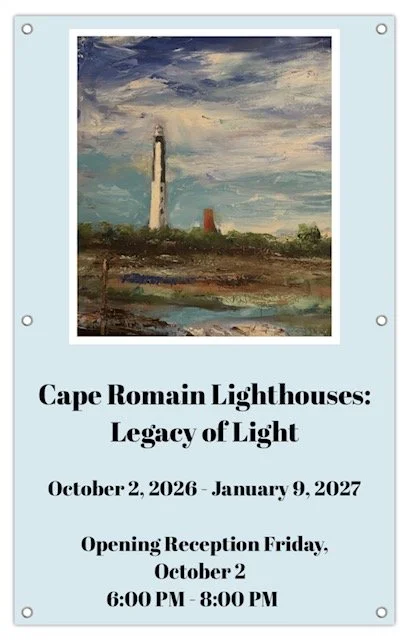
Cape Romain Lighthouses: Legacy of Light
October 2, 2026 – January 9, 2027
Reception: October 2, 6:00PM to 8:00PM
Sunday, October 4, at 3:00 join us for a guided gallery tour and talk by Tommy Graham, historic restoration specialist and lighthouse scholar. Both events are free, but donations are appreciated.
Cape Romain Lighthouses: Legacy of Light
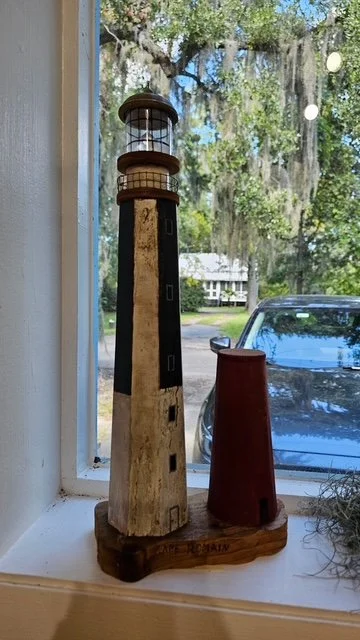
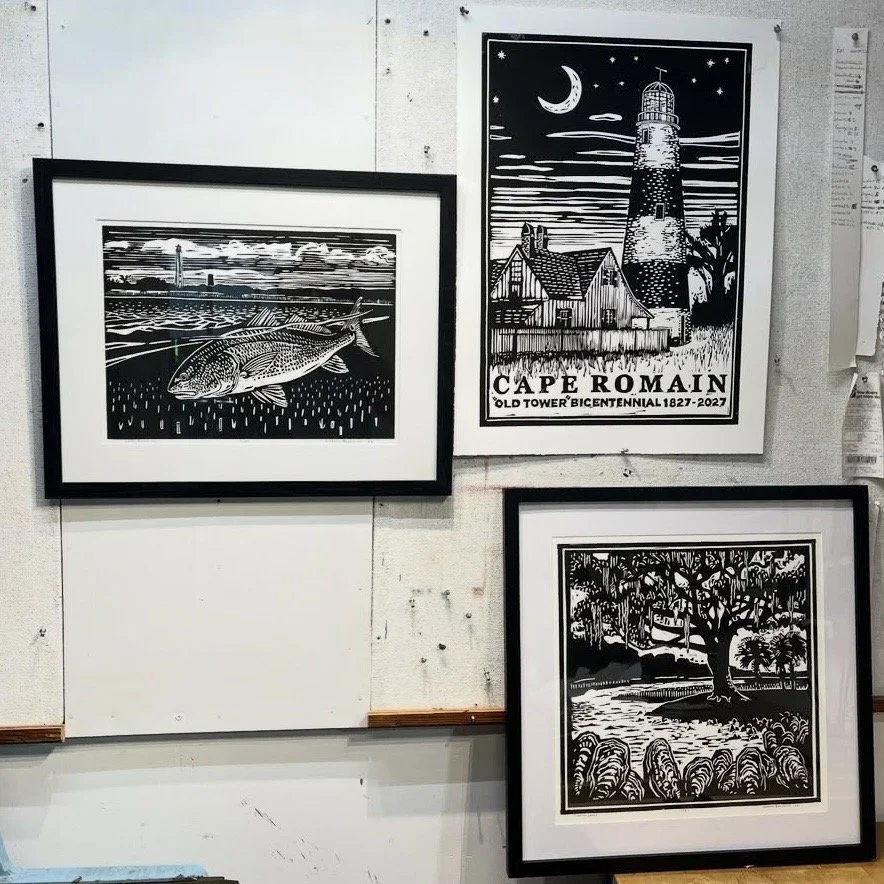
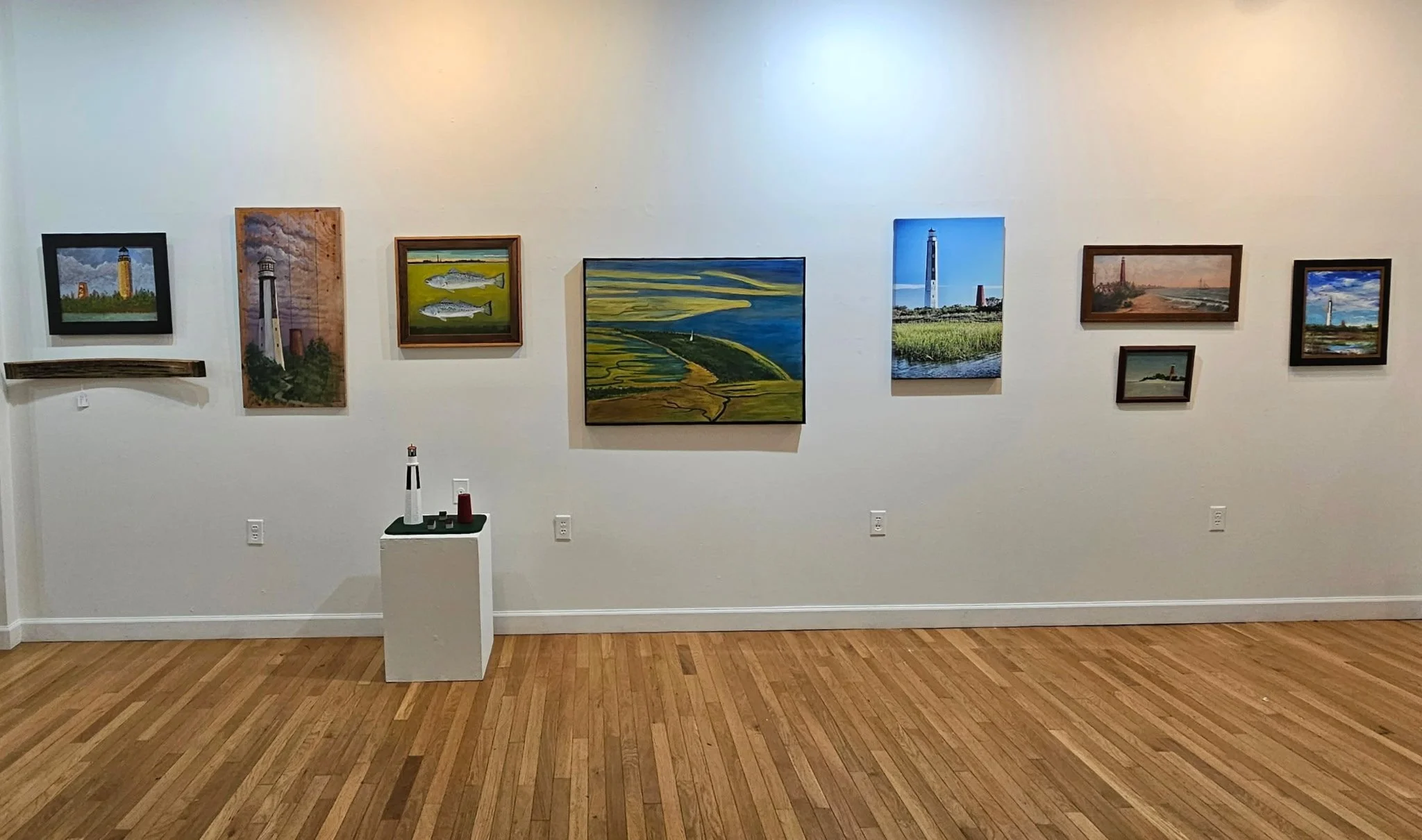
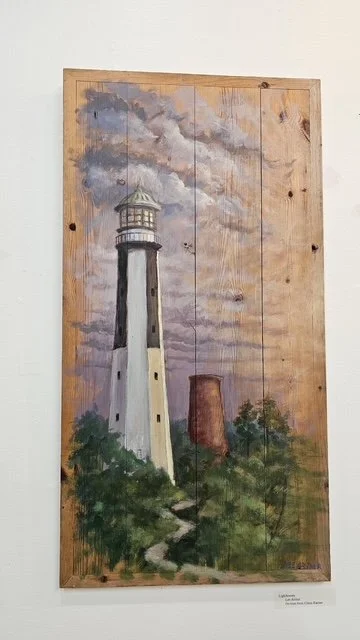
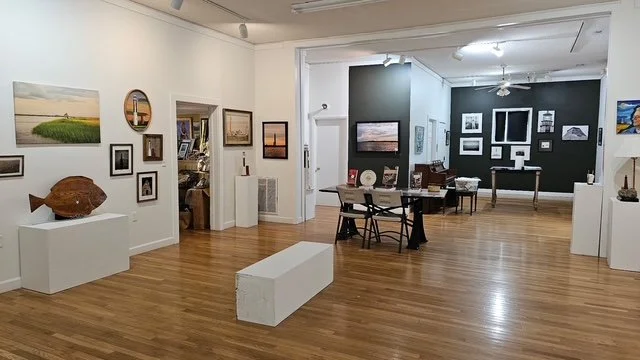
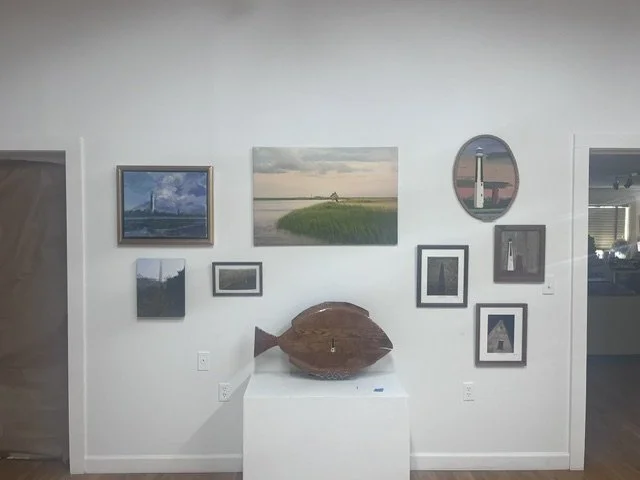
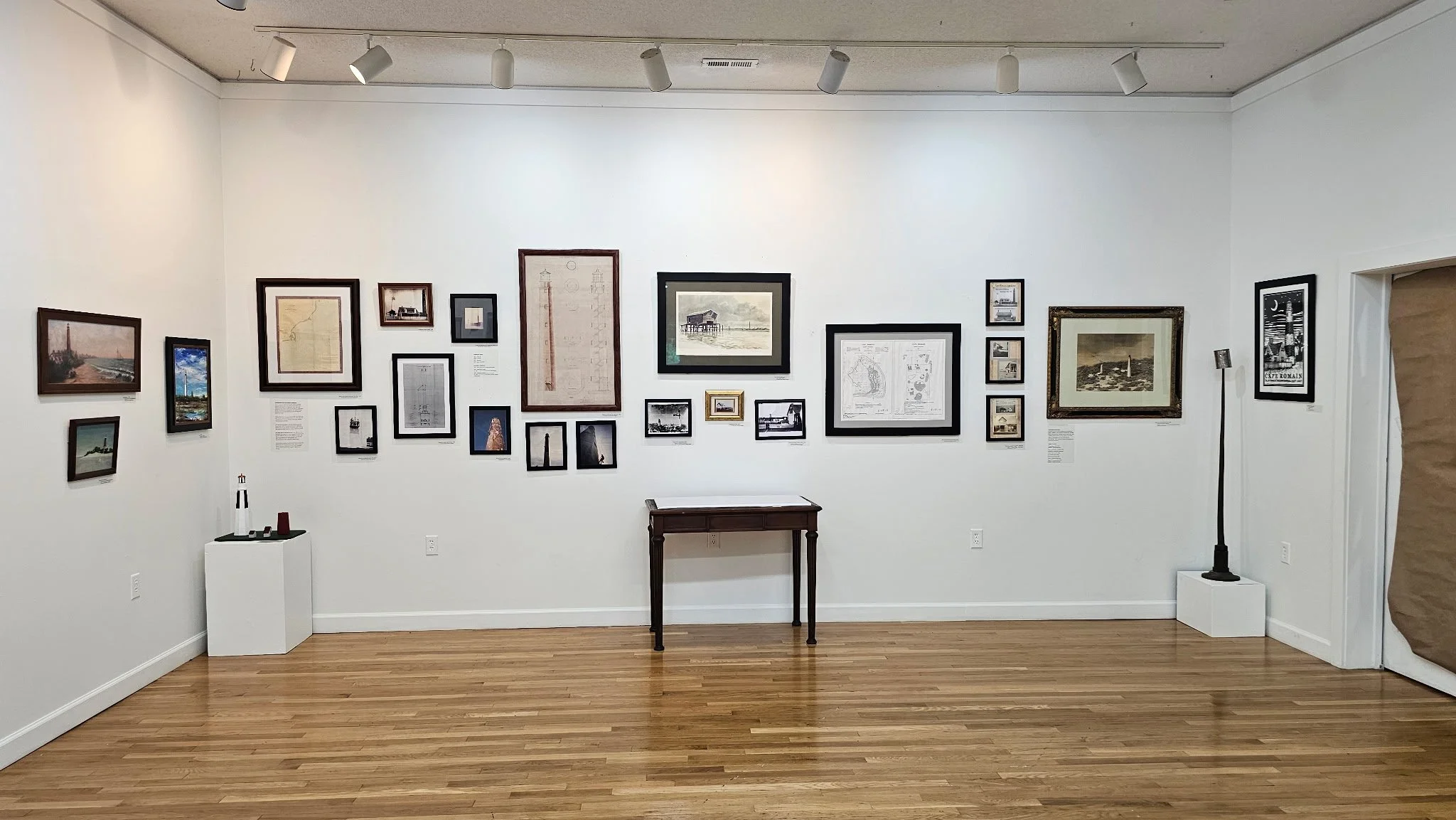
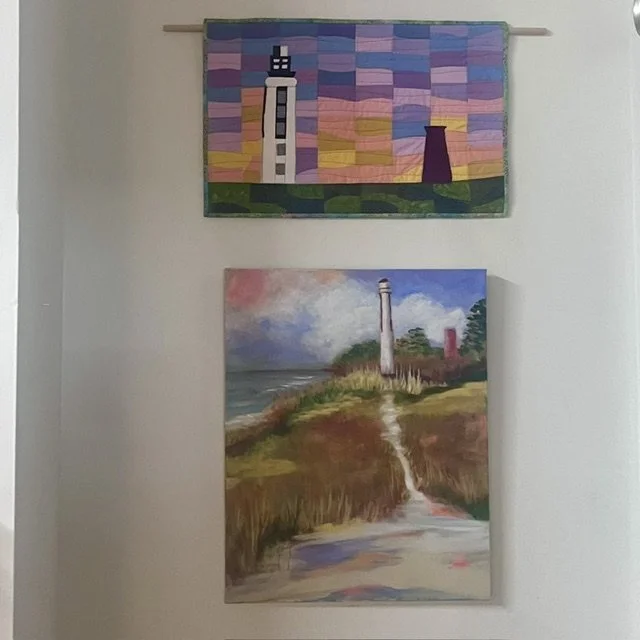
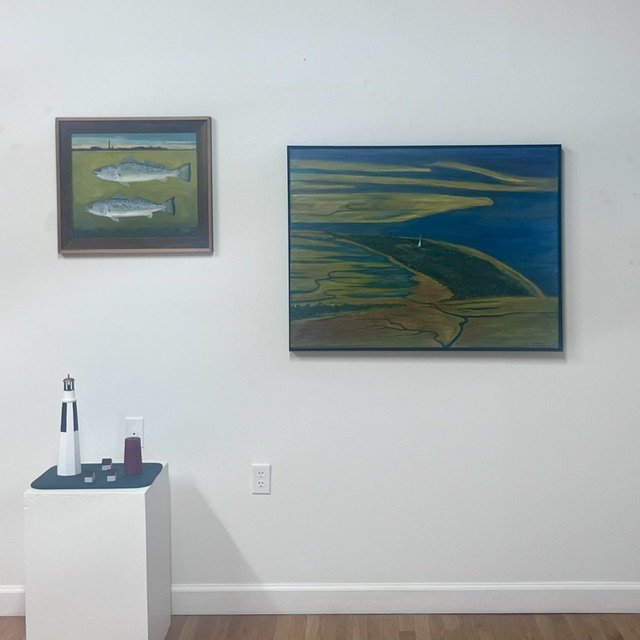
January 2027 marks the bicentennial of the lighthouses of Cape Romain. Built in 1827 and 1858, the two towers guided sailors through treacherous waters until 1947. They remain a landmark and beacon for the Cape Romain Wildlife Refuge and for residents of McClellanville and lighthouse lovers everywhere. To celebrate this anniversary, the McClellanville Arts Council is sharing interpretations by dozens of artists in a variety of media. Enjoy the Cape Romain lighthouses through the eye of the beholder.
Development of the Cape Romain Lighthouses
Sailors heading for Charleston from the north encountered shoals that lie just below water level southeast of the Cape Romain islands. Before the lighthouses, many ships were wrecked on these shoals. Funds were allocated for a light house in 1823. The plan was to repurpose the old windmill built by Jonathan Lucas, but Mill Island was prone to flooding and lacked fresh water.
The first lighthouse was constructed on “N.E. Raccoon Key” in 1827. It was a traditional brick conical tower, 65 feet high, and outfitted with six stationery oil lamps and 21-inch reflectors, visible for six nautical miles.
The light proved inadequate, and a new 150-foot tower was constructed in 1858. It was one of the first U.S. lighthouses equipped with the new prismatic Fresnel lens system. The new light produced a bright flash every minute, visible for 19 miles.
The lamps were lit with whale oil and, in the 1880s, kerosene. Oil lamps were replaced by a battery-operated electrical system in 1930, ending the need for resident lighthouse keepers. The light was darkened for three years during the Civil War and again during World War II. The lighthouse was decommissioned in 1947, replaced by offshore buoys.
The two towers continue to stand up to the elements, buoyed by maintenance and restoration projects led by Tommy Graham, historic restoration professional, the U.S. Fish and Wildlife Service, and the South Carolina Lighthouse Preservation Society.
Cape Romain Light Station
In addition to the two towers, the station also included three keeper’s dwellings, service structures including wells and brick privies, and a boat house. Residents were the Head Keeper, First Assistant, Second Assistant, and their families. The complex included chickens, goats, cows, and family pets. An above-ground telephone line connected the island to McClellanville. After a hurricane in 1916, the second line was connected to Georgetown.
Lighthouse Keepers
Thomas Skrine (1827-1839)
Thadeus C. Skrine (1839-1857)
Benjamin M. Smallwood (1857-1861)
Benjamin M. Smallwood (1866-1867)
Andrew Johnson (1867-1875)
J.F. Anderson (1875-1880)
John Robertson (1880-1906)
Victor E. Thelning (1906-1913)
August F. Wichmann (1913-1934)
Lemuel G. Owens (1934-1937)
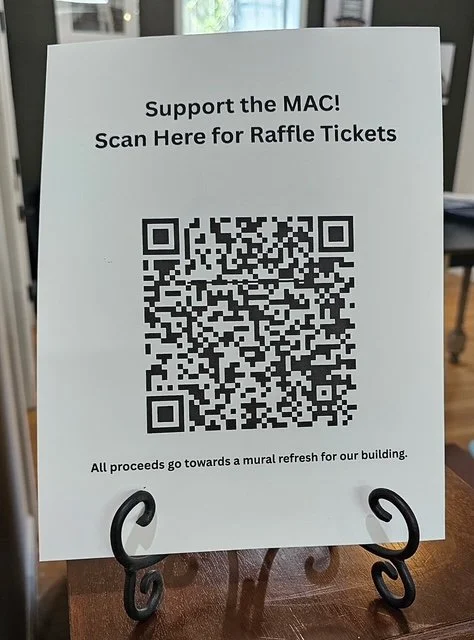
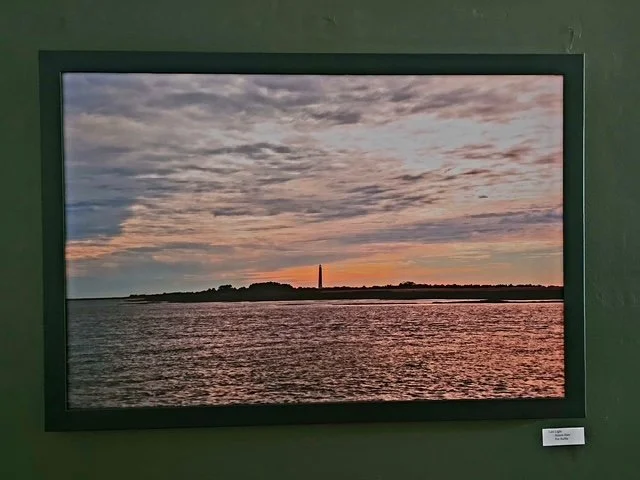
Photographer Simon Hare has donated this beautiful 24” x 36” landscape print of the Cape Romain Lighthouses at sunset in the fall. Photographed at low tide, the exposed oyster beds are just visible in the foreground, with the historic tower rising beyond them. The piece will be raffled, with entry available with a QR code or through our website at Cape Romain Lighthouses: Legacy of Light Art Raffle — McClellanville Arts Council throughout the duration of the exhibit. All proceeds will go towards a much-needed mural refresh on our building. A winner will be drawn at random on January 9, 2027. Good luck!